OG Advisory Resource Library
A free digital resource library for a CPA firm on Shopify, where the catalogue, the categories, the filters and the file delivery all run off product metafields.
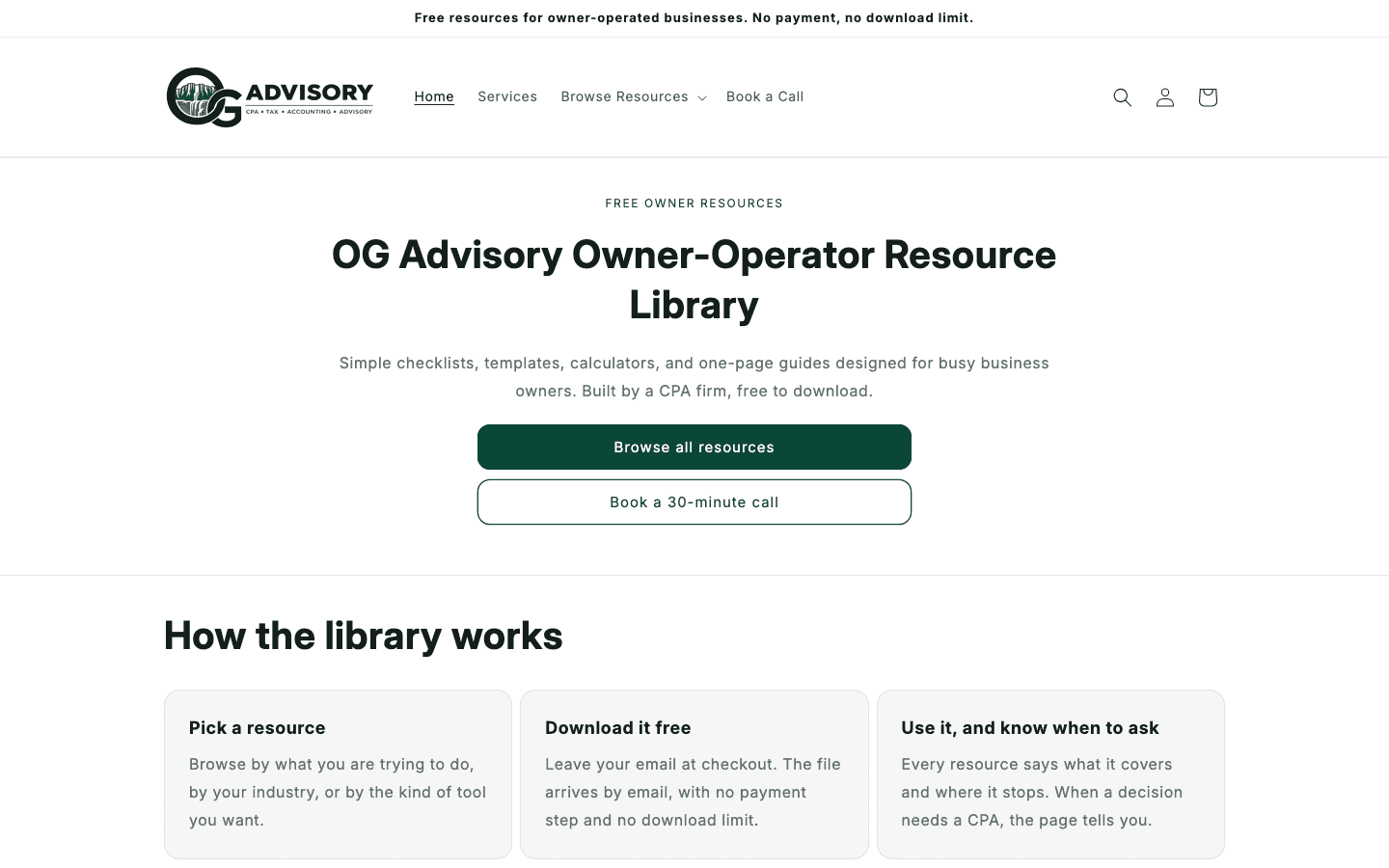
Home: what the library is, and the three steps a visitor goes through
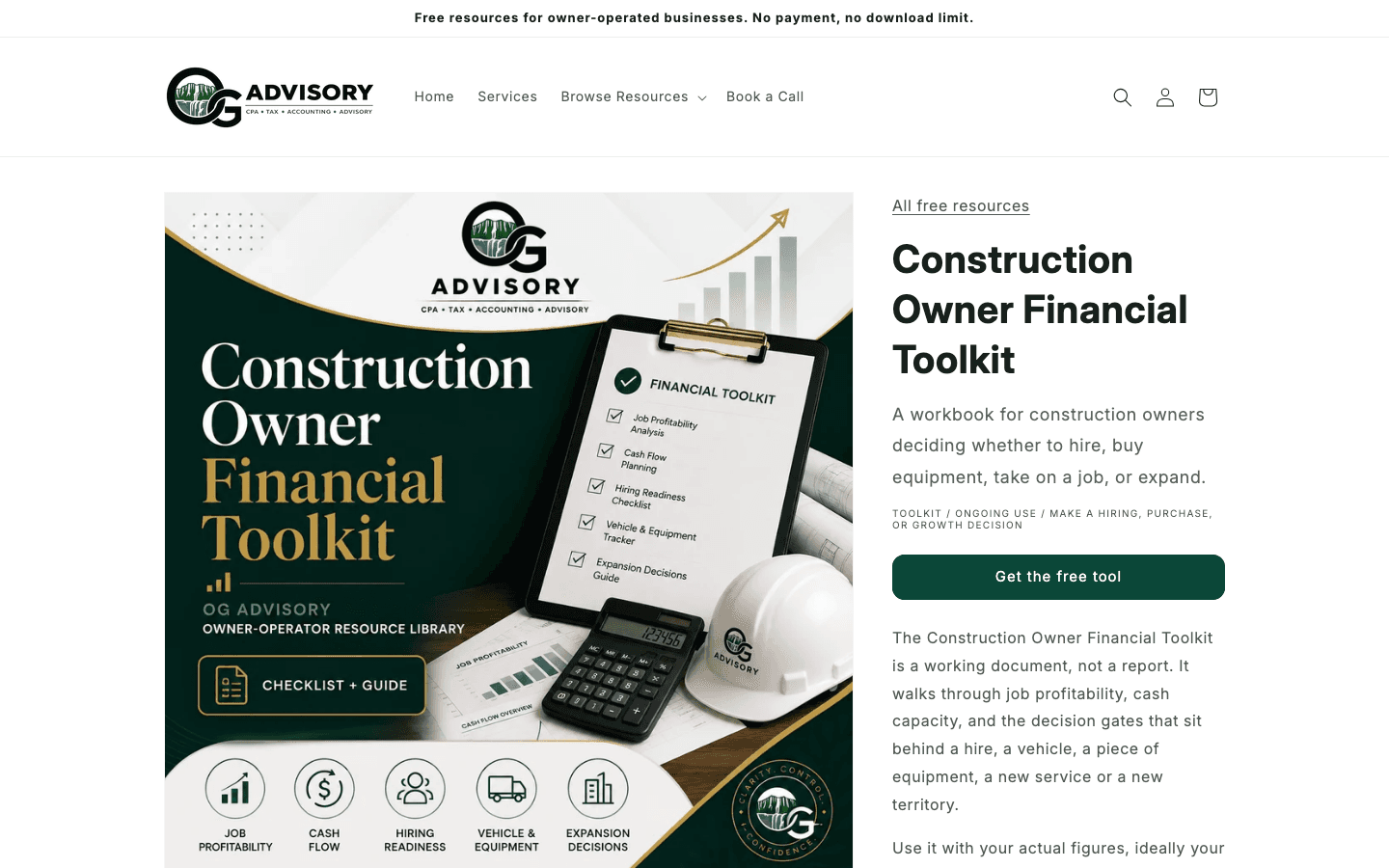
Resource page: the cover, subtitle and the type, time and need line all come from metafields
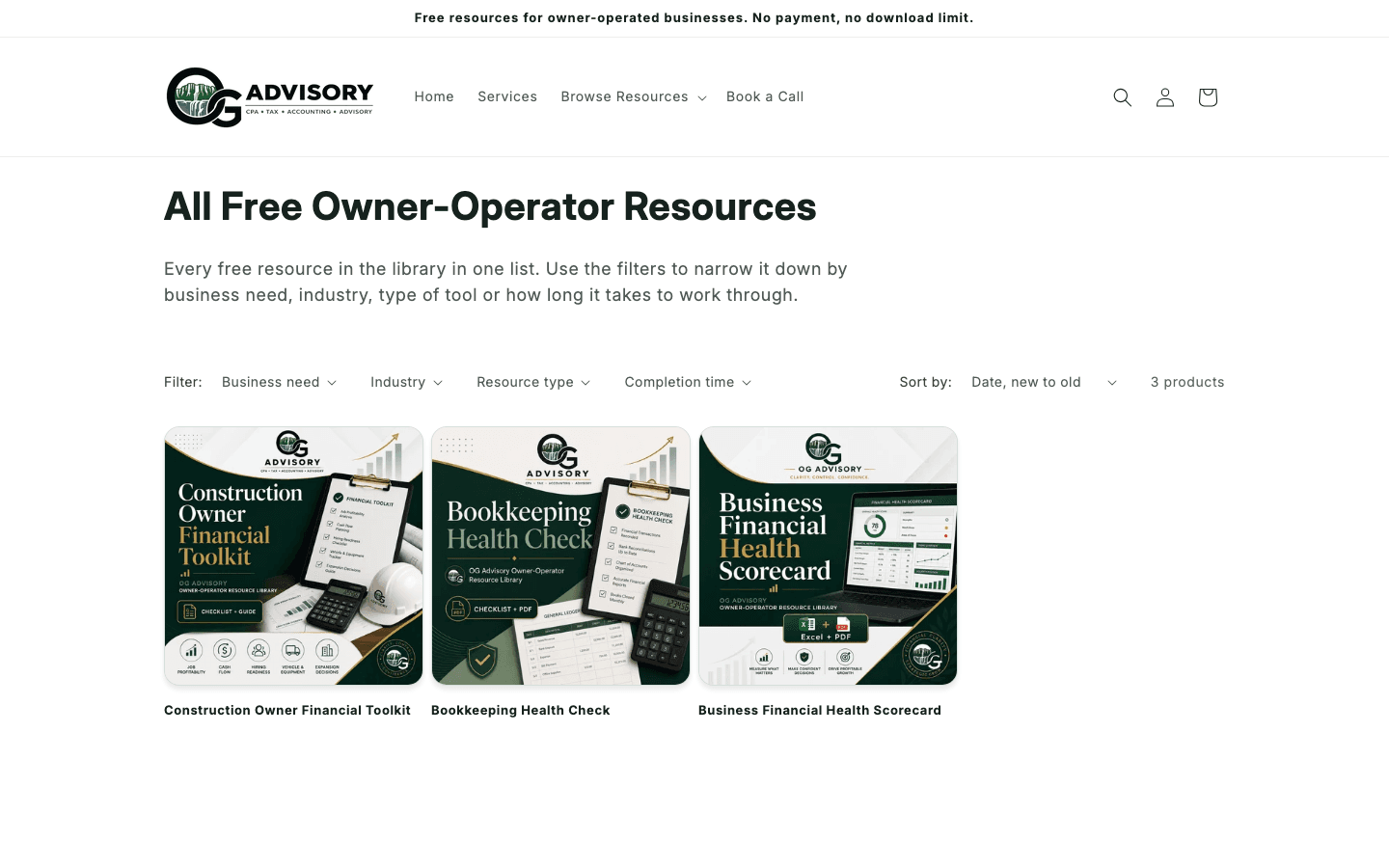
Browse: four filters, business need, industry, resource type and completion time, read straight from metafields
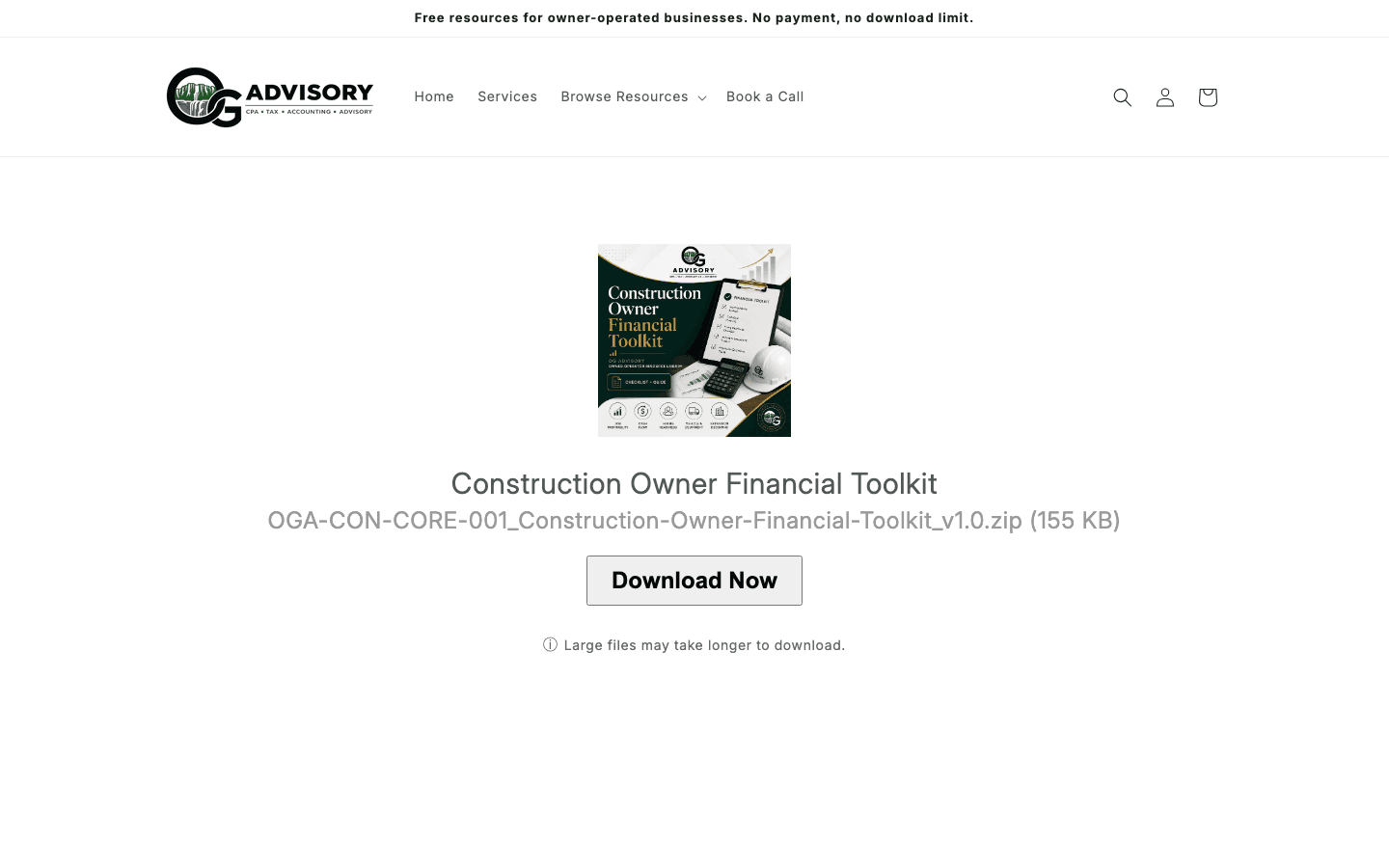
Delivery: the link from the order email, naming the exact file and its size
// OVERVIEW
About the project
OG Advisory is a CPA firm in Florida that wanted a free resource library for owner-operated businesses: checklists, scorecards, toolkits, given away in exchange for an email. The catch was not the storefront. It was that a CPA with no developer had to keep adding to it for years. Most builds like this rot because publishing one resource means editing collections, remembering tag spellings and touching a template, and six months later nobody knows the rules.
So I put the entire catalogue in metafields. Each resource carries 20 of them, and 21 automated collections match on those values rather than on tags. Fill the fields on one product page and the resource appears in every category it belongs to, in the four storefront filters, and on the browse pages, with no rule to edit anywhere. Tags carry no logic at all. Services are metaobjects, so the block at the bottom of every resource page pointing at paid work is edited in one place instead of on each product.
Delivery is a zero-dollar checkout: no payment step, automatic fulfilment, unlimited downloads, and an email the owner rewrites himself without touching code. I checked one order the whole way through by hashing the ZIP that arrived in the customer inbox against the original file, SHA-256 identical. Handoff was a 14-page architecture document signed off before any building started, then a 15-page SOP, a 42-column CSV template with its own guide, and two screencasts.
The store went public in August 2026 with three resources and picked up its first real customers within days of the password coming off, before any promotion had started. Six categories with nothing in them yet are hidden and switch back on from one screen when they fill up. The client closed the contract calling the build complete and asked about a second project.
// KEY FEATURES
What makes it work
Metafield-driven catalogue
Every resource carries 20 metafields: resource type, business needs, industries, completion time, file formats, files included, review status, version, last reviewed date, and the rest. The product page assembles itself from them through one template, so a new resource needs no template work.
Collections that need no curation
21 automated collections match on metafield values, not tags. A resource joins its categories the moment its fields are filled and leaves when a value is removed, so nobody edits a collection rule to publish something.
Free digital delivery
A zero-dollar checkout with no payment step, automatic fulfilment through the Digital Products app, unlimited downloads, and an order email the owner edits himself in plain text with variables for the name, the file and the link.
Bulk import that survives a typo
A 42-column CSV template, 20 of them metafield columns, with a field guide covering the values that must match exactly, the line-break separator for list fields, and how to read the import report when a row is rejected.
Handoff built for a non-developer
A 14-page architecture document, a 15-page SOP, the CSV template and guide, and two silent screencasts of 69 and 66 seconds covering publishing a resource and attaching the file with its delivery email.
// CLIENT REVIEW
What the client said
UpworkAug 2026
Awesome experience and really happy with my Shopify store built and strategic guidance!
Yamir Olivero Gomez OG Advisory LLC
OG Advisory LLCView on Upwork
// RELATED WORK